Practice · August 28, 2026 · 9 min · Joshua Dear
Robotics just leapt a year — from Beijing’s robot games to a $399 duck you can train
The 2026 World Humanoid Robot Games put more than two thousand machines on a track. Microduck puts reinforcement learning on a desk. Together they show where AI in the physical world is heading next.
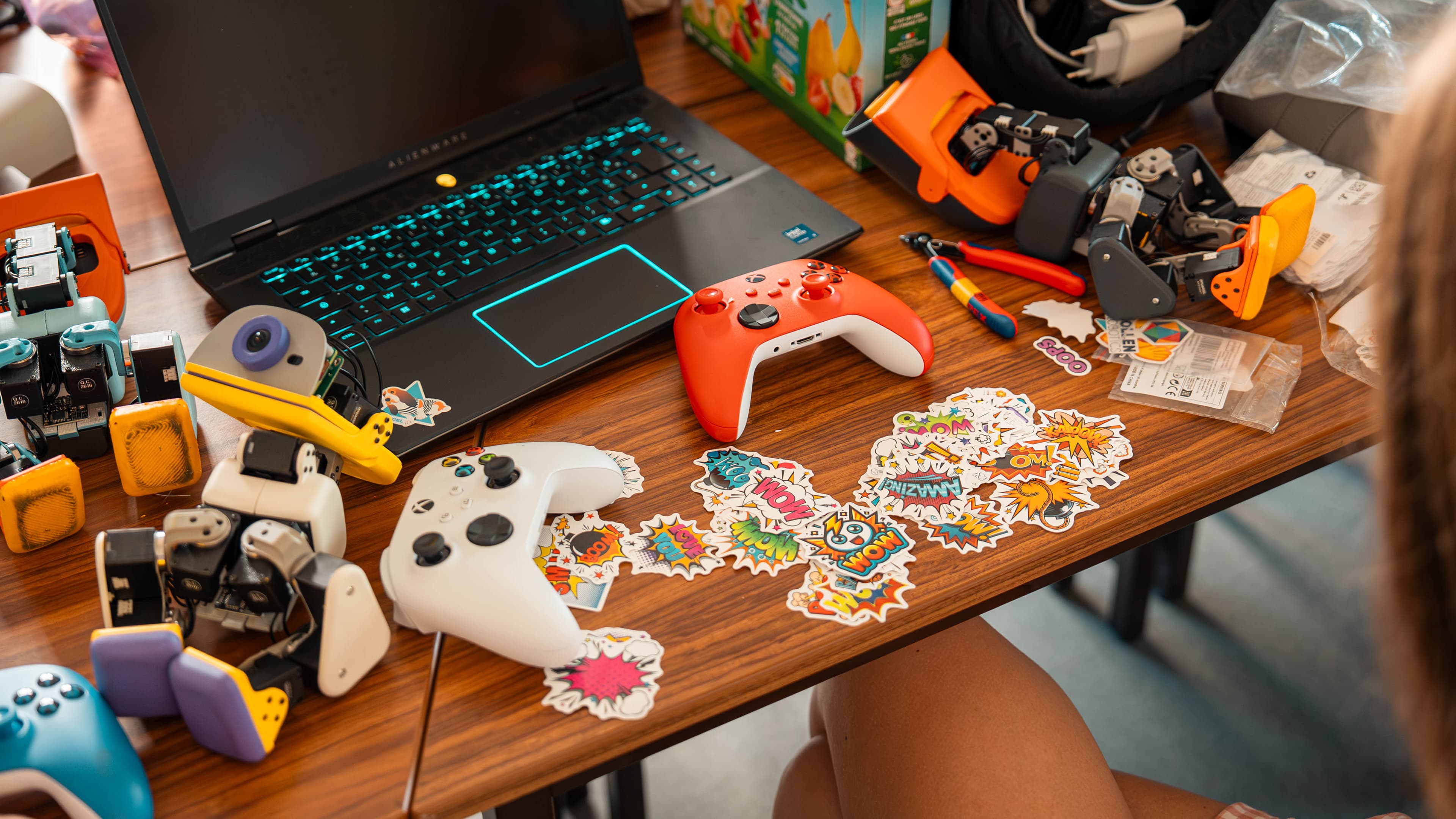
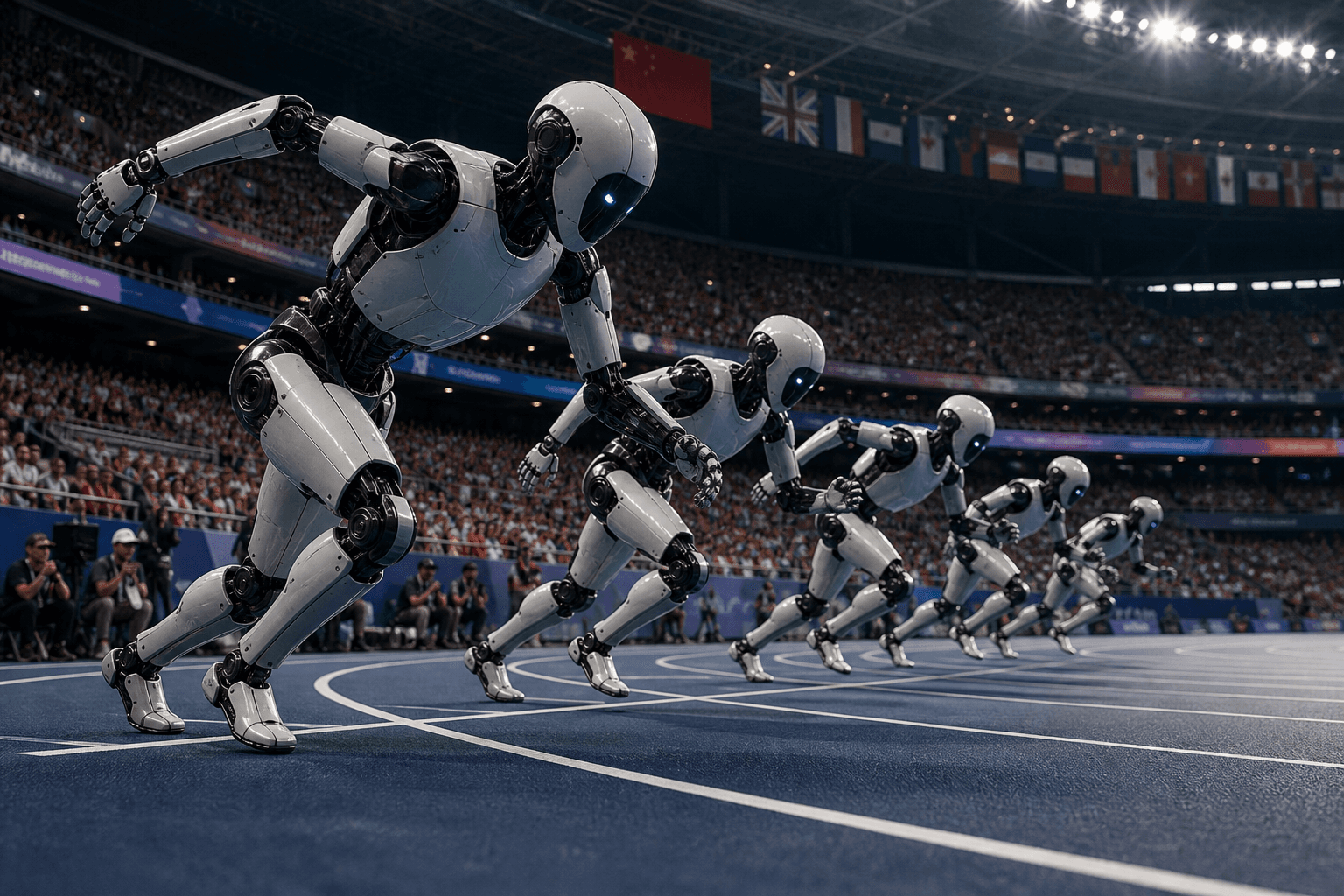
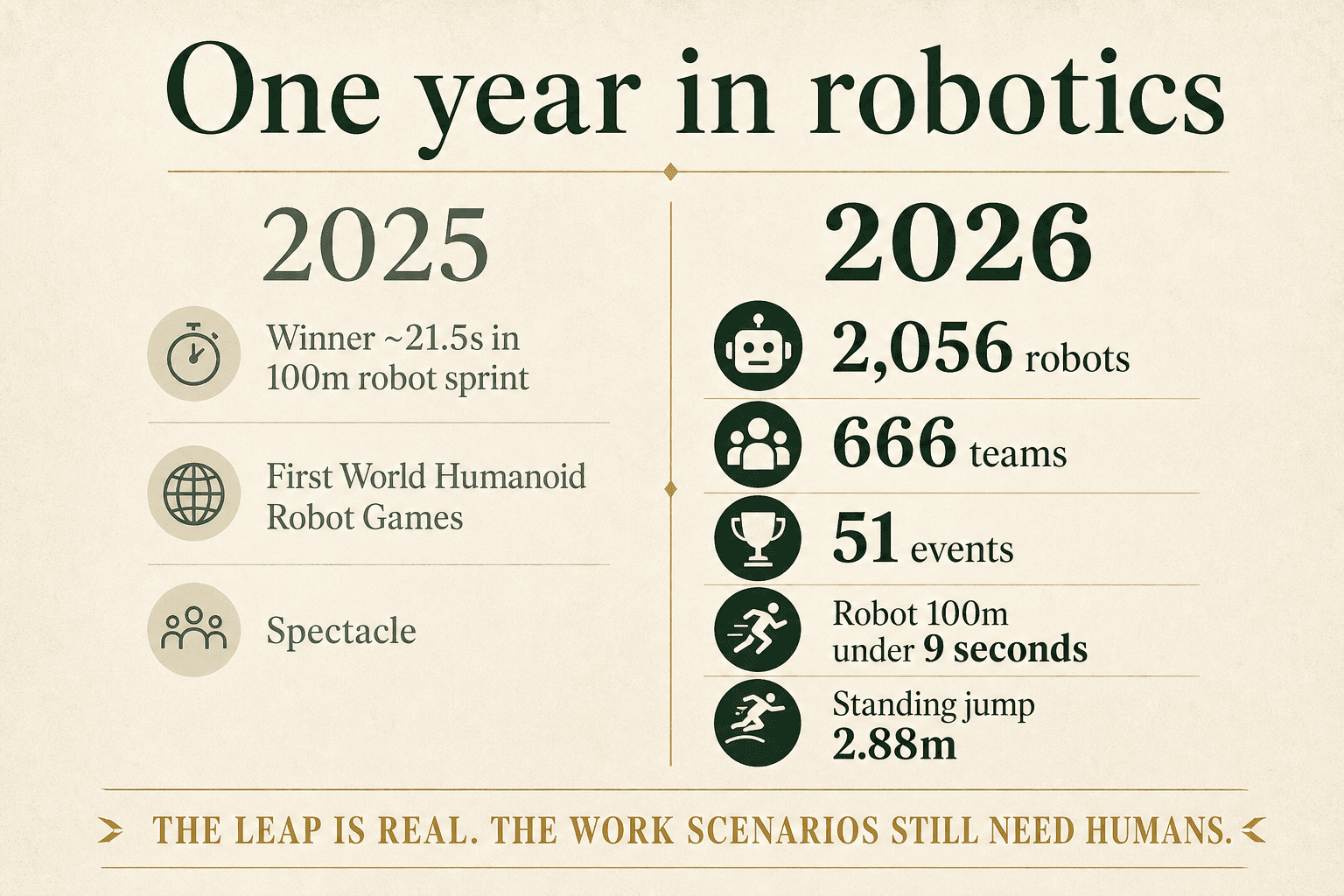
For a decade, “robots are coming” meant a demo reel and a press release. This month it meant a stadium. In Beijing, at the second World Humanoid Robot Games (August 22–26, 2026), organizers put more than two thousand humanoid machines on the field — 2,056 robots from 666 teams across 51 events — while the World Robot Conference nearby showed thousands of products. A year earlier, the same games crowned a 100-meter winner that needed more than twenty seconds. This year, a sprinting humanoid crossed in under nine. That is not a product update. That is a different sport.
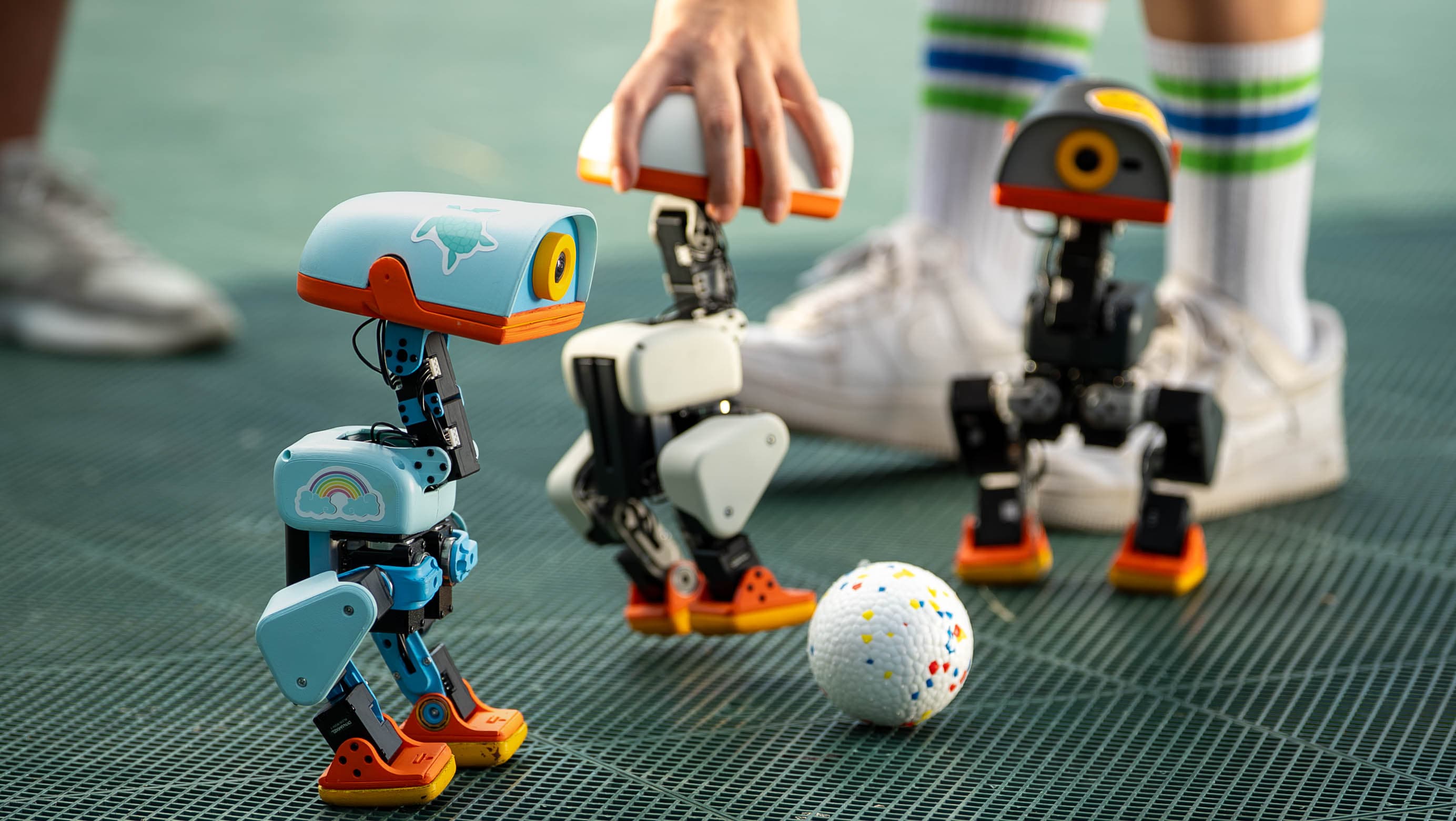
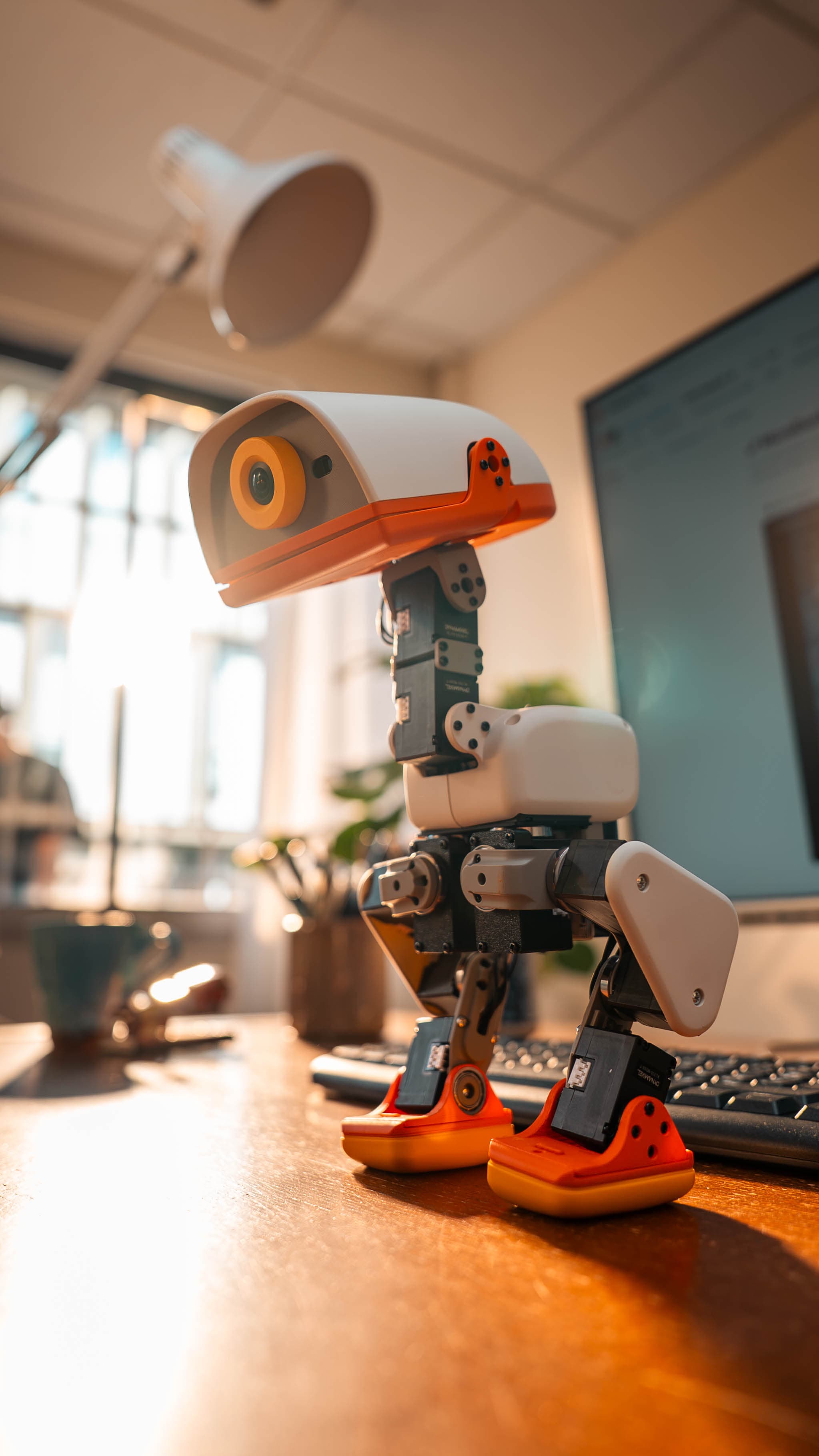
Meanwhile, on a desk that could be yours, Pollen Robotics (Hugging Face’s robotics team in Bordeaux) opened pre-orders for Microduck: a 25 cm biped with fifteen motors, a camera, LiDAR, and a beak that picks things up — $399 before tax and shipping, software you can retrain yourself. The stadium and the duck are not the same story. They are the same plot: AI is leaving the chat window and learning how to move.
The leap from 2025 to 2026 is visible on a stopwatch. The next leap will be visible in a warehouse, a hotel hallway, and a home.
What Beijing just proved
The Games are part Olympics, part industrial fair. Coverage from AP, Ars Technica, Forbes, and the event’s own reporting paints a clear picture: sports for spectacle, “work scenarios” for the market map. Football, dance, table tennis, free combat. Also laundry, hotel rooms, library shelves, firefighting and rescue. Forbes called the schedule one of the most honest documents in robotics — it shows what already runs without a remote, and what still needs a human on the stick.
- Scale: 2,056 robots, 666 teams, 51 events (30 sports + 21 work scenarios), National Speed Skating Oval, Beijing.
- Sprint: Tiangong Ultra and others posted 100m times under Usain Bolt’s 9.58s human world record — reports put the finals near or under 9 seconds, versus a ~21.5s robot winning time in 2025.
- Jump: a standing high jump around 2.88 meters was reported — well above the human outdoor record of 2.45 meters.
- Autonomy: some longer races (400m, 1,500m, relays) were framed as fully autonomous categories; complex tasks still allow teleoperation.
- Honesty reel: robots still trip, get carried off, and in some heats fail spectacularly — including fires. Progress and fragility in the same frame.
Read the work events carefully. Washing laundry and restocking a hotel room look boring next to a sprint that beats Bolt. They are the ones that matter for payroll. Only a fraction of firefighting teams finished the full valve-and-extinguisher course. That gap — flashy locomotion versus reliable chores — is exactly where the next twelve months will be decided.
Enter Microduck: AI you can put on a desk
If Beijing is the stadium, Microduck is the lab bench. Pollen Robotics (https://pollen-robotics.com/microduck/) describes a 25 cm, under-800 g biped: 15 degrees of freedom, front camera with a visible “REC” style indicator, compact LiDAR (8×8 time-of-flight), two IMUs, microphones and speaker, NFC in head and beak, Wi-Fi and Bluetooth, removable camera battery (~1 hour). Seven policies ship in the box — walk, sit and stand, kick, grab, roller skating, get back up — at a 50 Hz onboard policy loop. Pre-orders opened August 27, 2026 at $399; first deliveries targeted before Christmas for North America, Europe, and the UK. Four colourways: Cream, Graphite, Lavender, and Sky.
The important part is not that it is cute (it is). The important part is the loop Pollen publishes: train in simulation (MuJoCo), deploy on the robot, refine, publish the policy. SDK, sim, and RL stack are open source (Apache-2.0). The hardware design files are not — do not call it open-source hardware. You get a game controller out of the box; you do not need to write code to play. You do need the open stack if you want new tricks that the factory never shipped.
Why these two stories belong together
Humanoid games prove that balance, speed, and perception are improving on a steep curve. A desk robot proves that the same ideas — policies, sim-to-real, sensors fused into a body — can become a learning tool for people who will never field a team in Beijing. One is national industrial theater. The other is a $399 on-ramp to embodied AI. Businesses should watch both.
| World Humanoid Robot Games | Microduck | |
|---|---|---|
| Stage | Stadium + work scenarios | Desk, home, classroom, lab |
| Scale | 2,000+ humanoids, 51 events | One biped, 15 motors, seven starter policies |
| Signal | What industry can demo at speed | What a person can train and share |
| AI angle | Autonomy under rules and teleop limits | Reinforcement learning you run yourself |
| Watch next year | Fewer remote sticks; more finished chores | A library of community policies, not just demos |
What this means if you run a business
You do not need a humanoid in the lobby next quarter. You do need a clear head. Locomotion demos will keep going viral. The money will follow robots that complete a job without catching fire or calling a teleoperator. Treat Beijing as a capability map: which events ran fully autonomous, which still cheated with a human in the loop, which work scenarios actually finished. Treat Microduck as literacy: the same vocabulary — policy, sim, deploy, sensor — that will show up in warehouse RFPs and vendor pitches.
- Separate spectacle from payroll. A sub-9 sprint does not fold your laundry.
- Ask vendors what is teleoperated. The Games made that distinction public; your procurement should too.
- Build AI judgment now. Embodied systems will inherit the same briefing and review habits you use with ChatGPT and Claude — only with motors attached.
- If you learn by doing, a trainable desktop robot is a better teacher than another slide deck about “the robotics wave.”
One year from now
If 2025-to-2026 cut the 100m time in half (and then some), 2027 will not be about a prettier opening ceremony. It will be about whether work-scenario completion rates climb, whether teleoperation shrinks, and whether open training stacks like Microduck’s produce a long tail of useful behaviors — the way open models produced a long tail of apps. The stadium proved the body can move. The duck asks whether ordinary people can teach the next move.
That is the evolution: not smarter chat alone, but policies that survive contact with the floor. Watch the Games clips. Read the failure modes. If you are curious enough to learn with your hands, look at Microduck at https://pollen-robotics.com/microduck/. And if you want help separating robotics theater from a practical AI roadmap for your firm, book a complimentary Discovery Call — bring a real workflow, not a robot wish list.